The Kiwi is a flightless bird endemic to New Zealand
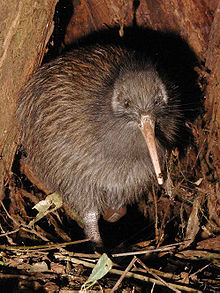
The Kiwi is a flightless bird endemic to New Zealand, known for its small, round body, long beak, and nocturnal behavior. It is a symbol of New Zealand and is one of the most unique and distinctive bird species in the world. Despite its small size and relatively weak wings, the Kiwi has adapted well to its environment and plays an important role in New Zealand's ecosystem.
Physical Characteristics of the Kiwi
Size and Body Shape:
The Kiwi is a small bird, typically measuring between 25 and 45 cm in length, depending on the species. It has a round, compact body, short legs, and a large, long beak. Although its wings are present, they are small and not visible, giving the bird a rather mammalian appearance rather than a typical bird-like form.Feathers:
The Kiwi has soft, hair-like feathers that feel more like fur or wool than the typical feathers found in most birds. Its plumage is typically brown or gray, with a slight yellowish tint. This type of feathering provides the Kiwi with insulation against the cool, damp New Zealand climate and helps it blend into its environment.Beak:
One of the most distinctive features of the Kiwi is its long, slender beak. The beak is slightly curved at the tip and has highly sensitive nostrils located near the end of the beak, allowing the Kiwi to "smell" food underground. This adaptation is crucial for finding food in the dark, as the Kiwi relies heavily on its sense of smell rather than sight.Eyes and Vision:
Kiwi birds have small eyes and poor vision, which is why they are nocturnal. They have adapted to rely more on their excellent sense of smell and hearing to navigate and locate food. Their small eyes also indicate that they are not dependent on sight but rather on other heightened senses.Legs and Claws:
The Kiwi has strong, sturdy legs with three toes on each foot. Its legs are powerful and designed for digging, which helps them search for food underground. The Kiwi uses its sharp claws to break open the soil and find worms, insects, and other invertebrates.
Habitat and Geographic Distribution
Habitat:
Kiwi birds are found in a wide range of habitats across New Zealand, including rainforests, grasslands, and scrubby areas. They prefer environments with dense vegetation such as forests or thick scrub, which provide shelter and abundant food sources. They are typically found in areas with ample cover from predators and weather conditions.Geographic Distribution:
The Kiwi is endemic to New Zealand, meaning it is found nowhere else in the world. While Kiwi populations once extended across other parts of the world, they are now confined to New Zealand and a few surrounding small islands. There are several species of Kiwi, and each is found in different regions of New Zealand.
Behavior and Feeding Habits
Nocturnal Activity:
Kiwi birds are primarily nocturnal, meaning they are most active at night. During the day, they rest in burrows, holes, or sheltered areas, avoiding the light and any potential threats. At night, they emerge to forage for food, using their keen sense of smell to find food buried in the ground.Social Behavior:
Kiwi birds are solitary creatures, generally preferring to live alone or in pairs. They are highly territorial and will defend their feeding areas and nests from other Kiwi birds. This territorial nature is a key part of their survival strategy.Diet:
Kiwi birds are omnivores, meaning they eat a variety of foods, including insects, worms, fruits, and roots. They primarily feed on earthworms and other invertebrates, but they also eat small fruits and seeds. They dig into the soil with their long beaks to uncover food and forage during the night.
Reproduction
Nesting and Egg-Laying:
Kiwi birds build nests that are located in burrows, hollow logs, or under rocks, often in secluded and protected areas. The nests are lined with soft materials such as leaves, grass, and moss. Kiwi birds typically lay one large egg, which is disproportionately large compared to their body size.Incubation:
After laying eggs, it is typically the male Kiwi that incubates the eggs. The incubation period is extremely long—about 70 to 80 days, which is the longest incubation period of any bird species. During this time, the male Kiwi remains dedicated to keeping the eggs warm and safe from predators.Chick Development:
When the eggs hatch, the Kiwi chicks are born with feathers and are able to walk almost immediately. Despite their early independence, the chicks still rely on their parents for protection in the early stages of life. They grow quickly and can begin foraging for food on their own after a few months.
Conservation Status
Threats:
The Kiwi's population is facing significant decline due to habitat loss, predation by introduced species (such as stoats, rats, and dogs), and environmental changes. The destruction of forests and wetlands, where Kiwis live and find food, also poses a threat to their survival. Additionally, human activities, such as urban development, continue to impact their natural habitats.Conservation Efforts:
The New Zealand government and various conservation organizations are actively involved in protecting Kiwi populations. Conservation efforts include habitat restoration, predator control programs, and the establishment of wildlife reserves. Special programs, such as predator-free sanctuaries, have been set up to create safe environments for Kiwi birds to thrive without the threat of introduced predators.
Interesting Facts about the Kiwi
Large Eggs:
Kiwi eggs are incredibly large, making up about 15-20% of the female's body weight. The egg is so large relative to the Kiwi's small body that it often presents a challenge during the breeding process. The egg is incubated carefully by the male until it hatches.Highly Territorial:
Kiwi birds are very territorial and do not tolerate the presence of other Kiwi birds in their home range. They will vigorously defend their territory against intruders, using vocalizations and physical aggression if necessary.Flightless:
The Kiwi is a flightless bird. Its wings are tiny and not capable of supporting flight, which is a characteristic of several bird species in New Zealand, where there are few natural predators. Despite their inability to fly, Kiwis are excellent foragers and use their strong legs for digging.National Symbol:
The Kiwi is an iconic symbol of New Zealand and represents the country both domestically and internationally. The term "Kiwi" is also used to refer to people from New Zealand. The bird's image is often used in logos, emblems, and national branding.
The Kiwi is a unique and fascinating bird that plays an essential role in New Zealand's ecosystem. With its small size, long beak, and nocturnal lifestyle, the Kiwi has adapted perfectly to its environment. However, the Kiwi faces many challenges, including habitat loss and predation by introduced species. Conservation efforts are crucial to ensuring that this iconic bird continues to thrive in the wild for future generations.


Komentar
Posting Komentar